Achieving the Writing Life of Your Dreams

Achieving the writing life of your dreams—is it possible? Are you closer to it than you were a year ago?

Here are some articles to read and consider if you hope to make the dream of a writing life into a reality.

“Are You Living Your Own Dream or Someone Else’s?” If we are not careful, we can unconsciously be following someone else’s agenda for our lives. This may be your first step toward achieving the writing life of your dreams.

“Honor the Writing Process” shows the practical side of going after your writing dreams and gives some good benchmarks to measure if you are truly serious about doing so.

“Keeping the Dream Alive” deals with how to not let your writing dreams when life gets in the way. Life happens, sometimes in majorly distracting ways. Can you keeping your dream alive even then? Yes!

“The Power of Incremental Change Over Time” Most people underestimate this. They think they have to take massive action to achieve anything significant.

When It’s Time to Update Your Writing Habits

writingSome writing habits can serve you all the days of your life. But other writing habits need to be moderated or tossed out when your season of life changes.

I’m in a season like that right now, and one thing that works for me during such changing times is to read about famous authors’ writing habits. It gives me ideas of what might work better in my fluctuating circumstances.

Time To Change?

Sometimes the need to revise our writing habits is obvious. Your times and places to write before you have your first child may never match your writing times and places after the babies start to arrive. The same is true for writing when you have a full-time job compared to when you’re retired. (And that changes again when your elderly father moves in with you.) Or when you’re healthy compared to when you’re healing from an accident or illness. So many events can leave you feel overloaded and in need of changing your habits.

Life is always changing, and sometimes drastically. But even with the common, garden-variety type of life changes, old writing habits can become obsolete. Other more workable habits need to replace them if your career is to continue.

Writers Reveal Their Writing Habits

Is your life is in a state of flux at the moment? If your previous schedule and habits no longer work for you, consider a change. Check with successful published writers. See what works for them. Then feel free to copy anything you like and try their habits on for size. We can all learn from each other.

Some great places to start looking include:

Are Your Writing Dreams Big Enough? Shoot for the Moon!

Every 7-10 years, I go through a restless writing period. I sense a need or desire to do something different, usually something “they say” is out of vogue or not the genre flavor of the month.

Lately, something has been egging me on to try something more challenging. I’ll talk about that in the coming weeks, but for today, I want to challenge you with a question. 

ARE YOUR WRITING DREAMS BIG ENOUGH?

Shooting for the Moon

I’ve been reading about famous inventors (like Edison), famous businessmen (like Ford), and famous entrepreneurs (like Bill Gates and Steven Spielberg). They lived in different historical periods and pursued different kinds of projects. But they all had one thing in common. They did NOT set “reasonable and achievable goals.” They dreamed bigger dreams than anyone thought they could achieve. And then they achieved them–and more.

Edison (who only had a few months of formal education) decided to try to invent a light bulb in less than three years, even though far more intelligent scientists had spent more than 50 years so far trying to do the same thing. An outlandish goal! “They” said it couldn’t be done. But he ended up inventing it in two years!

When Ford started his auto company, the other 250 American automakers were turning out 12 to 300 cars per year. A reasonable goal for Ford to set would maybe be 150 cars per year. But his dream was to produce cars that the average family could afford–not just the wealthy. And he ended up producing 1,000 cars per day off his assembly lines. (That’s per DAY, not per year.)

Their Key to Major Success

Because Spielberg and Gates are present-day phenomena, you’re already familiar with their stories. They became such huge successes for the same reasons Edison and Ford did. They dreamed big, new ideas and then went ahead and accomplished what “they said” was impossible.

The award-winning writers of the past and present who became household names did the same thing. Their books were repeatedly rejected at first too, because “they said” no one would read them. Names like Dr. Seuss, Pearl Buck, Louisa May Alcott, Agatha Christie, Beatrix Potter, John Grisham, James Patterson, Judy Blume, Madeline L’Engle, Margaret Mitchell, Anne Frank, J.K. Rowling, Stephen King…the list goes on and on of authors who decided to follow the advice of Write What You Love.

Ignore What “They Say”

Maybe “ignore” is too strong, but at least take all the expert advice out there with a big grain of salt. Because of the changes in the publishing industry, the naysayers are thicker than ever. “They say” you have to write what will sell instead of following your passion. “They say” you can’t get a good agent–you need to settle for someone with no experience whom no editor will work with. “They say” you can’t expect to sell your novel to a national publisher, so get familiar with self-publishing. There’s not a thing wrong with any of those choices, but make sure they are choices you want to make.

There were many, many years where I needed to write for the market 100%. I needed to write what would sell and what I could get contracts for ahead of time. My single parent household depended on that income. The books were good, and some of them excited me, but I was also practical. I have some leeway now though, and lately I’ve been exploring outside my comfort zone where some yet-undeveloped dreams and ideas lie. I have the itch again to write something different.

I’ve been asking myself the same question lately that I posed to you: ARE YOUR WRITING DREAMS BIG ENOUGH?

Writers Finding Encouragement, from Without and Within

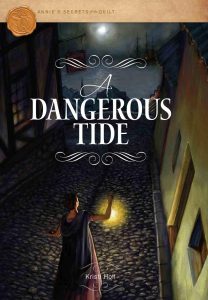
Talk about encouragement! I was sent this photo a couple weeks ago. Her name is Kathy Carter, and when she and her husband visited England recently, they stopped at Jane Austen’s home in Chawton. She is in the reading room, and she found my Jane Austen book, A Dangerous Tide, on the shelf. I was astounded that it was still there.

As I wrote in this blog post “Jane Austen and Me,” the book had been accepted to be housed in Jane’s home for 12 months, at which time it would be taken down to make room for others. But the photo of Kathy showed that my mystery was still in Jane’s home, 29 months after it was added. I would have been thrilled with the unexpected news at any time, but that particular morning, it was heaven sent.

I had gotten bogged down in my “dream project,” another historical set in England, wondering if I were chasing rainbows. For decades now, I’ve had contracts before I started writing any books. So working again without a contract on something where I don’t have a buyer lined up feels like tight-rope walking without a safety net. I was waging a war with self-doubt about continuing to pursue this project when the photo of Kathy Carter arrived in my email’s Inbox. What encouragement that was to me just when I needed it!

Encouragement to Keep Writing

Writers all need encouragement. Sometimes we need it because we’re starting out, piling up rejections, and wondering if we’re wasting our time. Sometimes we need encouragement if published books don’t garner the sales or 5-star reviews we hoped for. And sometimes (like me now), we are attempting a book outside of our normal niche, and one that requires skills we don’t yet have. 

The way we get encouragement has changed over the years. When I started writing, we got fan letters from kids in snail mail only, and they weren’t part of a class assignment. (They sometimes started out, “I hope you’re not dead like the last author I wrote to.”) It was easy to save letters in a box back then. Now, you need computer files or places to back up in the cloud if you want to peruse such things later for encouragement on the days when the words don’t flow or your rejection letters outnumber your fan letters ten to one.

Or you can do like I’ve started to do. I print out photos and put them where I can see them. I plan to add Kathy Carter’s picture to this Jane Austen photo group on my office wall. It’s important to do things like this so that you’re reminded of your good news. Otherwise, you can forget all about it in less than an hour as various crises happen and life rushes in to fill your time.

Encouragement On Your Own

But what if you don’t have tangible signs of encouragement? Most writing days, this will be true. You must search out your own encouragement then. There are many places online where writers can now go for encouragement. Two of my own posts include an article on how to stop discouraging yourself (Silent Sabotage) and an article (Learned Optimism) by Randy Ingermanson on simple ways to change your thinking that lift you out of discouragement quickly.

Find sources of daily encouragement. Also search for a writing group (locally or online), or start one, where encouraging each other is a large part of it. And remember to encourage other writers yourself. You will reap what you sow.


Good Intentions, Plus RELIABLE Accountability, Spells Success

intentionsWhat do all success stories have in common? Action. Success is the result of action.

What sustains and maintains that success? Repeated, reliable sustained action.

You can’t succeed by doing nothing. You must recognize the importance of being intentional, or having good intentions. But that isn’t enough. The often overlooked step is making it tangible. This intention can’t merely be in your head or scribbled on a scrap of paper that you’ll lose in your car. You must have a system you trust. (paraphrased from Stephen Guise’s blog The Minimum Requirement for Success)

Tracking Progress? Or Losing Track?

One of the hardest things many of us struggle with is not backsliding after getting a grip on a habit we want to establish. I have health habits I work on (drink eight glasses of water each day, exercise thirty minutes each day, no screen time after 8 p.m. so I can sleep, sugar-free day), writing habits (write 25 minutes and rest 5 minutes, don’t check email before 10 a.m.) and spiritual (devotional and prayer first thing). The trouble is, once I establish a habit well and then move on to work on another habit, I tend to forget (and backslide) on the progress I’d worked hard to establish.

There’s too much to remember! And yet, most health and writing habits are only valuable if you are consistent, if you do them daily or almost daily. I’ve blogged about mini habits in the past, and I’ve run several 30-day mini habit challenges which were very successful. Mini habits are much more reliable than motivation to help you meet your goals. I’m still a firm believer concerning mini habits, but I have been unable to find an easy and reliable way to track both earlier habits and new ones I’m working on. 

Until now.

The Best Way I’ve Found to Track Habits

I have tried various ways to track daily habits: wall calendars with check marks, notebooks with a list of daily habits, an erasable board on my office wall. They all had their benefits. I could see the wall calendar and erasable board whenever I sat down to work in my office, so it reminded me then. The notebook idea meant I could take my reminders on the road, thus keeping up with my habits on trips (which is a real challenge.) But nothing worked for all situations.

Then I read Stephen Guise’s idea about habit tracking on a smart phone with a free app called the Habit Loop tracker. It took me an hour to set it all up, but I have used it faithfully for weeks now. It’s fun. It’s colorful. And it’s the only thing visible on my smartphone’s home screen. (In other words, it’s not just a productivity app that is lost among two dozen other apps.) It goes with me everywhere. I don’t have to be online to track a habit. It keeps track of all the statistics for me. It allows me to set reminders, if I want to. And did I mention that it’s FREE?

For a simple tutorial in setting it up, read The New Best Way to Track Mini Habits by Stephen Guise. He takes you step-by-step through the process of setting it up, including screen shots of how he did it. My home screen looks different than his though. I only have the Habit widget and my ten mini habits on the home screen.

Good Intentions Versus Intentions That Work

intentionsGood intentions, for our writing or anything else, only work if we have a way to hold ourselves accountable. If you’re still hunting for a system to keep building reliable habits, I hope you’ll try this Habit Loop idea.

If you do, let me know how it works for you!

Lies We Writers Tell Ourselves and Others

liesI’ve tried very hard and written consistently during this summer, making good use of the time I’ve had between visiting company, having grandchildren overnight, taking trips, and attending birthday parties.

And that statement is a big FAT lie.

It’s a lie I’ve told myself this summer. And it’s a lie I’ve told others. Truthfully, I haven’t made very good use of my time at all. If the first statement were true, I would have much more to show for my writing time this summer.

Fooling Ourselves

Sometimes the lies we tell ourselves have a big enough “grain of truth” in them that we’re only guiltily aware that we’re stretching that truth. Honestly, I did put in quite a few hours per week on my book idea, but not nearly as many hours as I pretended. On the other hand, sometimes we know that we’ve stretched the truth to such an extent that it’s close to snapping like a rubber band.

Why do we do it? And more important, what can we do to stop lying and actually become productive with our hours?

I was pondering that question when I came across a post by one of my favorite “habits” bloggers, James Clear. I’ll quote a bit below, but then I hope you’ll click over to his full article if this portion describes you as closely as it has me this summer.

Stop the Lying!

We often lie to ourselves about the progress we are making on important goals.

For example:

  • If we want to lose weight, we might claim that we’re eating healthy, but in reality our eating habits haven’t changed very much.
  • If we want to be more creative, we might say that we’re trying to write more, but in reality we aren’t holding ourselves to a rigid publishing schedule.
  • If we want to learn a new language, we might say that we have been consistent with our practice even though we skipped last night to watch television.

We use lukewarm phrases like, “I’m doing well with the time I have available.” Or, “I’ve been trying really hard recently.” Rarely do these statements include any type of hard measurement. They are usually just soft excuses that make us feel better about having a goal that we haven’t made much real progress toward. (I know because I’ve been guilty of saying many of these things myself.)


Why do these little lies matter?


Because they are preventing us from self-awareness. Emotions and feelings are important and they have a place, but when we use feel-good statements to track our progress in life, we end up lying to ourselves about what we’re actually doing.

Practical Answers

truth liesUnless we distinguish between truth and the lies (and half-truths) we tell ourselves, we won’t make a lot of writing progress. That “honest introspection” comes first. Then, after admitting the truth, we can pursue solutions.

James Clear’s article gives you some examples of what he uses for solutions. On Friday, I’ll share with you something I found that has turned my productivity around and provided the self-accountability I needed. Maybe it will help you as much as it’s helped me!


How Does Your Talent Grow? (Or Can It?)

Related imageIs your amount of God-given writing talent a fixed quantity? We often hear that it is, but that you can study and practice to improve your writing skills. If that’s true, how would you respond to this email?

“I know that publishing has changed drastically, but I don’t want to self-publish, and I don’t want my first book to be an e-book. I want to hold a published (by a traditional publisher) book in my hands. I’m willing to work hard—very hard—to improve my craft, and I’m willing to market, but I only have so much talent. Do I even have a chance of landing a traditional publisher?”

Award-winning songwriter Irving Berlin knew that while talent may first separate you from others, the advantage it gives doesn’t last long. “Talent is only a starting point,” Berlin said. “You’ve got to keep working that talent.”

Working that talent? Berlin sounds as if he’s saying that we all start with some talent–but there’s something we’re supposed to do with it. After 35 years of writing and 27 years of teaching writing, I have to agree. At least, my own experience supports the idea that our bit of writing talent is more than a given attribute, like our height or bone structure. It’s something we can work with.

Okay, but what do we do with it?

Where You Focus Matters

John Maxwell, motivational speaker, often talks about finding your “strength zone,” or the areas you excel. He says the majority of people don’t do that. Instead, they waste time focusing on strengthening their weaknesses instead.

For example, I can write short nonfiction very quickly, and little rewriting is needed. I also have a talent for plotting good mysteries. On the other hand, I can’t write a poem to save my life. It would be silly for me to spend a large amount of time trying to write verse novels or picture books. Instead it makes more publishing sense to follow Maxwell’s advice and get even better at what I already do well.

Increase Our Talent? Really?

Most of us believe that we are born with a certain amount and type of creative talent that is fairly fixed. We know we can practice our writing skills and improve, but talent seems as constant as having blue eyes or big feet.

But are you truly stuck with a certain amount of talent, and you just have to make do with it? Or are there ways to maximize whatever God-given talent you might happen to have? Maxwell says there are thirteen ways you can make the most of your talents. For writers–for anyone–that’s good news! Choose one of these ways today, and use it to help your talent grow.

  1. Belief lifts your talent.
  2. Passion energizes your talent.
  3. Initiative activates your talent.
  4. Focus directs your talent.
  5. Preparation positions your talent.
  6. Practice sharpens your talent.
  7. Perseverance sustains your talent.
  8. Courage tests your talent.
  9. Teachability expands your talent.
  10. Character protects your talent.
  11. Relationships influence your talent.
  12. Responsibility strengthens your talent.
  13. Teamwork multiplies your talent.

Get Started Today!

Many writers compare themselves to others and feel as if they were on the short end of the stick when talent was distributed. Even so, there are things you can do to help it grow. In changing publishing times, this is good to know.

Which one of the ways above can you choose to implement today? And then another way tomorrow? I challenge you to take each attribute and focus on one per week–and watch your talent grow in the coming months.

Finding–and Maintaining–Passion for Your Writing

“Enthusiasm is one of the most powerful engines of success. When you do a thing, do it with all your might. Put your whole soul into it. Stamp it with your own personality…Nothing great was ever achieved without enthusiasm.”

~~Ralph Waldo Emerson

Where do you get this enthusiasm? It comes from having passion for your writing.

How does a writer act who is passionate about his writing? He can’t wait to get up in the morning and get started. He is eager and energetic. This comes from loving what you do, and doing what you were born to do or feel called to do. Feeling this passion for your writing keeps you going. Even on our most frustrating days, quitting is no longer an option. When you’re passionate about your writing, perseverance is almost a given.

Sounds like heaven! But how does a writer achieve such euphoria?

You need the answers to two main questions:

  • How do you develop passion for the most important areas of your life?
  • How do you maintain that passion during the inevitable tough times?

First: Find It

Are you doing what you really want to do in your writing career? Are you doing it at least part of the time? (I know that for most of my writing life, it was half and half. Half the time I was writing what I really wanted to write–fiction usually–whether it sold or not. The other half of my writing time went to work-for-hire projects, teaching, speaking or whatever brought guaranteed income.) Ask yourself: Am I truly doing what I want to do?

If you’re not skilled enough to do the work you’d love to do, make time to educate yourself so you are. While maintaining your current job (either outside the home and/or raising children), do whatever it takes to prepare for your dream writing jobs. It’s very difficult to create the passion for doing something you don’t want to do or a job you are “settling for” because you don’t feel skilled enough to do what you’d really love to do.

Do whatever you need to do to overcome those lying voices in your head that say you’ll never be good enough, you’re not smart enough, you’re not whatever enough. Read inspirational books, read author biographies about how they got started and grew as writers, and say “no” to whatever is eating the time you need to study and read and write. My favorite way to “change my brain” is through Caroline Leaf’s online 21-Day Detox program, which I have used for several years now. 

Second: Maintain It

Passion for your writing makes your days fly by (in a good way). It helps you get more done in less time. That being true, it deserves whatever time you need to keep your writing passion alive. If your passion for writing dies, then writing just becomes another drudge job.

So how can you maintain passion and enthusiasm every day? First–and maybe most obvious–is to spend more time actually doing what you love to do. What is your pet writing project, the one that may never sell but you love it? Spend more time each day working on it. Even if it’s only an extra fifteen minutes or half an hour, it will remind you why you love to write.

Another key to maintaining passion for all your work is to keep a close eye on your physical, mental, emotional, and spiritual health. For example, I gave up sugar a couple years ago after being diagnosed with an autoimmune disease. For a gal whose blood type is Hershey’s, that was a big deal for me. But more and more, sugar was making me sick and sluggish and sleepy. It was affecting my work–both the output and how I felt during work time. I don’t miss the sweets now, but during the first thirty days, I might have mugged you for your candy bar. What does that have to do with writing? It’s about maintaining passion. I don’t feel passionate about anything–including writing–if I don’t feel physically well. 

Tricks of the Trade

I know I’m not alone in trying to find and/or maintain passion for my writing on some days (or during certain seasons of life). Feel free to share (here or on Facebook) some tips for how YOU maintain your writing enthusiasm during fluctuating times!

7 Habits of a Highly Effective Writer

“In writing, habit seems to be a much stronger force than either willpower or inspiration.” ~~John Steinbeck.

For several years, I’ve had a list of “The Seven Essential Habits of a Working Writer” scribbled on a scrap of paper and pinned to my bulletin board. I had copied the list from a book by author Jim Denney, who said, “Habits are constant. Inspiration is variable—it comes and goes. That’s why habits are better than inspiration. It is habit, not inspiration, that builds writing careers.”

I want to elaborate on that list, explaining why each habit is important—and how to implement that habit in your daily writing life.

A Writer Writes

You must begin to think like a writer—and that will lead you to acting like a writer. Then you’ll build the habits of a writer—and eventually you will get to enjoy the benefits of being a writer.

Seven Essential Habits of a Working Writer are:

  • Write Daily
  • Cultivate the Art of Solitude Amid Distractions
  • Write Quickly and With Intensity
  • Set Ambitious But Achievable Goals
  • Focus!
  • Finish What You Start and Submit What You Finish
  • Believe You Can

With all of these writing habits firmly in place, you can’t help but succeed!

Habit #1: Write Daily

Writers write. It doesn’t get more basic than that. If your dream is to be a full-time writer someday, you’ll need to develop the habit of writing every day. Habits are powerful, and once writing becomes as habitual as brushing your teeth, your productivity will go through the roof. And more writing translates into better writing. It takes practice like any other skill, and cliché or not, practice makes perfect.

Grab the Time

If you’re still working at your day job (whether outside the home or at home with children), you’ll find it more difficult to carve out a daily writing time. If that’s your situation, you must learn to grab whatever bits and pieces of time you have available. (I know this system works. I wrote my first five middle-grade novels with a newborn, toddler and preschooler underfoot—writing in tiny blocks of time like this.)

Here’s how it goes. Let’s say you have a story or book to write, but you don’t have big chunks of free time. Instead you make a commitment to grab just ten or fifteen minutes every day to work on it. Everyone can carve fifteen minutes out of each day to make some progress. You make a commitment to yourself that your head won’t hit the pillow for the night until you’ve spent at least fifteen minutes on your project. Those bits of time add up. Just fifteen minutes a day is 91.25 hours in a year—more than two full 40-hour work weeks.

It’s All in Your Head

The second reason this principle works is that it keeps your head in the game every day. You don’t just need time to write. You need head space that is free, even if it’s only one tiny corner of your brain reserved for thinking about your writing. If you don’t do it every day, other things quickly intrude and finally crowd out that head space reserved for your writing. Then you have to start over every few weeks or months when you get back to your project.

With writing for fifteen minutes each day, you never lose momentum or have to waste time trying to remember where you left off and who the heck this character is. Writing daily makes each fifteen-minute session its most productive and effective.

Like most of us, once you get rolling, the fifteen minutes often turns into much more if you’re not interrupted. It will build a great daily habit so that when you do have more time—maybe even eventually going full-time—your daily writing habit will already be cemented into your routine.

Procrastination a Problem?

Working writers have to be self-starters. If you have trouble doing even fifteen minutes a day, you’ve probably got a procrastination problem or writer’s block. For several articles on such challenges, see the ten articles in Writer’s First Aid on “Getting Started.”

Habit #2: Solitude Amid Distractions

Solitude is the best preparation for writing, and being alone to prepare one’s mind to write is lovely. But it’s not always possible, and you don’t want to be dependent on being alone in order to write. If I had decided I must have total “alone time” to write, my career would have been delayed at least a decade (until my youngest child started school).

Instead, develop the second habit of working writers—and cultivate the art of solitude amid distractions.

The Ideal versus the Real

Some writers have solitude all day long. Someday, after the kids are grown, or you quit your day job, or you get an assistant to handle your PR and marketing, you might have solitude without distractions. Frankly, though, that is NOT the life of 90% of writers. However, if you work at it, it’s possible to develop the feeling and benefits of solitude even when surrounded by people and interruptions. Rather than trying desperately to create a silent outer environment for yourself, it’s more practical and helpful to develop a kind of solitude, or quiet inner space, in your mind. That “room of your own” may need to be within, at least in the beginning. 

The Eye of the Hurricane

I wrote with small children in the room or nearby for many years. I stopped if they truly needed me for something, but often they were content to play in the same room or the play room by my office. Still, even when children are playing amicably, there’s lots of noise.

You have to find ways to enter the eye of the hurricane, so to speak, that spot in the middle of chaos where it’s still and you can hear yourself think. It isn’t second nature to us, but it can be done. As Isaac Asimov said, “We must find our solitude within. Regardless of the noise and distractions that swirl around us, we must be undistractable.”

Change the Things You Can First

To help yourself find that quiet place inside where you can concentrate on your writing amid distractions, be sure you’re first doing all you can to minimize the interruptions. There’s no point in wasting energy overcoming something that you could simply get rid of. Some distractions you can quickly eliminate. For example, if the Internet is a big lure, close down your email and get off line instead of mentally fighting the lure of Facebook and YouTube videos. (I remove my laptop—the computer with Internet access—to a completely different room while I write.) For many more practical ideas, see “Dealing with Distractions” in Writer’s First Aid.

Finding your calm center takes practice, but it can be done. I wrote my first novels with small children around, and I wouldn’t have had it any other way either. They were both my joy and my inspiration. I didn’t want to remove myself from them—but I needed to be able to work within the chaos too.

Start to practice now. To begin, write just five minutes at a time. Your ability to concentrate—and find solitude amid distractions—will grow.

Habit #3: Write Quickly and with Emotional Intensity

Many writers tell me their goal is to write full-time, to either make a living at it or to supplement their family income. For that to happen, you must move from being a hobbyist to being a “working writer.” You will need to write with two things simultaneously: speed and emotion.

Two-Part Goal

First, let’s talk about speed. It has to do with momentum, with pushing yourself to get the words written. Professional working writers almost all write quickly, moving forward with their drafts instead of stopping continually to re-read sections or obsess over details or revise the same section several times. Just get your first draft down as fast as you can.

You’ve heard about being “in the flow” when writing. It’s that marvelous time when you’re writing with speed and intensity and lose track of time as the words pour out. It’s difficult to reach this “flow” state where you’re lost in time if you constantly jerk yourself out of the story and go back to something previously written. When writing a rough draft, keep moving ahead.  This will help you streamline the writing process to make the most of whatever writing time you have.

Emotional Intensity

The second factor in Habit #3 is intensity. What difference does it make if you write with passion or power? For one thing, it gets you involved in your story or message and helps create that “flow state”. (Hint: choose a topic that you truly care about.) Also emotional intensity makes a powerful impact on the editor who reads your work. (Hint #2: if you don’t feel the intensity while you’re writing it, the editor won’t feel it when he’s reading it.)

Emotional intensity reaches readers—and they spread the word in good old-fashioned word-of-mouth advertising (or new-fashioned word-of-mouth via Facebook and Twitter.)

If you’re able to write fast, but you feel you lack the emotional intensity he’s talking about, get to know your own passions better. (For help with identifying your skills and passions, see the inventory called “Getting to Know You…” in Writer’s First Aid.)

Habit #4: Set Ambitious but Achievable Goals

 “If we did all the things we are capable of doing, we would literally astound ourselves.” ~~Thomas Edison

Goal-setting is a must-have habit if you want to be a working writer, someone who is going beyond the hobby stage in writing. Time and again it’s been proven that you increase your chances of achieving your goals immeasurably if you write them down and post them in a prominent spot so you read them frequently.

Break these written goals into long-term, mid-term, and short-term objectives. Long-term goals (write a bestseller, sell a series) define what we hope to eventually achieve. Midterm goals describe specific projects we are working on right now (under contract or with our own self-imposed deadlines.) This includes deadlines for completing them. Shortterm goals define the daily and weekly tasks we must achieve (write five pages daily, mail three queries by Friday) in order to reach our mid-range goals. Note: these are your production goals, and without them, your other goals will NOT be reached.

Give yourself permission to dream big. Your goals need to inspire you. As Andrew Carnegie once said, “If you want to be happy, set a goal that commands your thoughts, liberates your energy, and inspires your hopes.” I will say it again: dream big!

Out of Sight, Out of Mind

One of the biggest problems with goal-setting is that we tend to write the goals down and never (or rarely) look at them again. If they aren’t in the forefront of your mind, they’re so easy to forget.

Jack Canfield (co-creator of the Chicken Soup for the Soul books) suggests re-reading your goals out loud three times a day. As you do, close your eyes and picture each goal as if it were already accomplished. Keeping the idea fresh in your mind greatly increases your chances of following through to achieve your goals.

How can you remember to do this? You might put your goal list on a pack of cards you can carry with you. Or…“Put a list of your goals in your daily planner or your calendar system,” Canfield advises. “You can also create a pop-up or screen saver on your computer that lists your goals. The objective is to constantly keep your goals in front of you.”

Begin Now

I’d encourage you to take time and write down at least one long-term, mid-term, and short-term goal. The short one needs to support or help you achieve the mid-term goal, and both goals need to support your long-term goal. As you work through these “seven essential habits for working writers,” apply the habits to your written goals.

Habit #5: Focus!

All the previous habits won’t help much if you can’t focus on your work when you sit down at the keyboard. Each previous habit, however, will help you focus.

For example, if you don’t sit down daily for at least fifteen minutes to write (Habit #1), you lose track of your story. You lose the focus after a long break and often have to start over. Setting short-term measurable goals (Habit #4) creates a series of small deadlines, allowing you to just focus on today’s tiny portion to accomplish. And learning how to concentrate amid distractions (Habit #2) will help you zero in on today’s task.

Ready, Aim, Focus!

I used to have a camera with a focusing lens. By rotating the lens barrel, I could focus on the child in the foreground, or the dog sleeping in the background, or the mountain in the distance. As I focused on each separate thing, the other parts of the picture went out of focus.

Writers must be able to focus like that with their manuscripts, both to avoid being overwhelmed and in order to get the job done. We must be able to focus on big things in the background (like the plot or character emotion arcs) or things in the middle (like making sure each scene has the necessary dramatic elements) and close-ups (tightening this paragraph, writing a cliffhanger chapter ending.) If you try to focus on and fix everything at once, you’ll feel overwhelmed and freeze.

Need Some Help Focusing?

We live in a society that bombards us with information, demands, and media overload to add to personal schedules already full with family, day jobs, and all the things that add up to very busy lives. Being able to focus can be a real challenge.

First, figure out what is keeping you from being able to focus. Quite often it’s a simple thing. Perhaps the noisy neighbors in the apartment above you keep you from sleeping well or being able to concentrate. If so, buy a white noise machine, set it to crashing waves or rainfall, and turn it up until it drowns out your neighbors.

Maybe you can’t focus because your writing desk is covered with piles of things to do: the unfinished query to a magazine, the unfinished story for the contest, bills to pay, a writing magazine to study, and the note that says “BUY INK TODAY!” You can’t focus on your writing because you keep feeling like you should be doing something else. If so, clear your desk of the piles. Put them in the closet or on a bookshelf in plastic stackable trays. Get them out of your eyesight so you can focus on the writing task at hand.

Make a list of all the things (personal and professional) that you feel are hampering your ability to focus. Then set about dealing with each and every one.

Habit #6: Finish and Submit

Habit #6 is “Finish What You Start and Submit What You Finish.” Sounds pretty obvious, doesn’t it? If you want to become a working writer, either part-time or full-time, you have to finish your manuscripts, submit those manuscripts, and keep on submitting until they’re sold.

Unfinished Business

I know a couple of very fine writers who may never submit the novels they’ve been polishing for years. They endlessly fuss and obsess over their manuscripts. And it’s a real shame because those novels are wonderful. At some point, you need to say, “It’s finished!”

One caution: if you become careless, you might not do the necessary polishing that deep revisions call for. You might settle for a good enough manuscript, but not rise to the excellence you’re capable of. It makes no sense to spend weeks, months or even years writing a book and then, when finishing, to produce and submit a careless effort. Pay attention to detail. Do you very best right up to the end.

Finishing strong is something great athletes learn. Finishing strong is something writers also much learn.

It’s Finished—Then What?

Study the markets. Find publishers who publish the type of book you’ve written, and make a list. Research online to make sure the publishers you’ve listed are legitimate. (Just Google “XYZ Publisher scam” and “XYZ Publisher complaints” to find out.) Make sure you understand the difference between traditional publishers (who pay you) and vanity presses (who expect you to pay them to print your books.)

Make a list of at least half a dozen publishers where you could submit your manuscript. And when it comes back—all writers get some rejections—you send it out again. And again. That’s what working writers do!

Habit #7: Believe You Can

This last of the essential habits of a working writer might be the toughest one for you: Believe You Can.

Every writer doubts his ability at some point—and many successful, much-published writers deal with doubts about their writing abilities every single writing day. Those successful writers know a secret though.

They feel the doubt—and write anyway. That’s what they decide to do: sit down and write, whether they feel like it or not.

Act As If

Don’t wait until you have confidence in yourself to start writing. It simply doesn’t work like that. The confidence—the feelings of “Hey, I can do this!”—comes AFTER you start writing. Feelings follow behavior, not the other way around. Only when you act like a writer, will you truly feel like a writer. Writers write. Writers show up at the page and stay there, putting down one word after another. And at the end of each writing session, they believe a little more strongly that they can be writers. (For more help in this area, see “Who’s in Charge?” and “Voices of Self-Sabotage” in Writer’s First Aid.)

I hope you’ll keep this list of seven writing habits posted where you can see it—and read it—often. “Without these habits, how could you do anything but fail?” Jim Denney asks. “But with all of these habits firmly in place in your life, you can’t help but succeed.”

I couldn’t agree more. That’s the power of daily habits!

[Reposted from here.]

Inner Critics: Valuable Editor or Time Waster?

Writers are opinionated people.

Our brains never seem to stop. We criticize because we “know” how things and people should be. This “critical editor component” of our personality is absolutely invaluable to the editing and revision process. If you can’t spot what’s wrong with a manuscript, you can’t fix it.

However, this same critical ability can cause writers to actually lose focus, allowing their writing hours to slip away with little or no work done.

Think About It

Many of us go through our daily lives with our internal critic or editor in charge. We don’t see the person right in front of us as he or she is (which may be perfectly fine.) Instead, that person reminds us of a demanding boss or an ex-spouse, and we “see” characteristics that aren’t there. Or they remind us of a forgiven (but not forgotten yet) event. Stress!

Conversely, we think the person in front of us is “supposed” to be kind and supportive (or whatever our inner definition of the perfect parent/spouse/child/sibling). And yet many such relationships are anything but, leaving us hurt and upset because they should be supportive. More stress! Life rarely satisfies a person who lets the “shoulds” run his life.

Do we spend our time “shoulding”? We don’t see a child who is happily singing at the top of her voice. (That child should be quieter in the store!) We don’t see an interesting shade of purple hair. (That teenager should resemble a middle-aged adult instead.) We don’t see the predator or user sometimes either–because trusted family members shouldn’t be such things. Our “shoulds” and “shouldn’ts” color everything we observe.

Change Your Perspective

Our inner editor sometimes keeps us from seeing what’s in front of us. We are constantly “revising” the facts. So what’s the problem with that? You can’t accept–and get peace about–what you can’t honestly see or face. You stay stirred up–a condition rarely suited to being creative. Sometimes the simplest solutions evade us because we’re all riled up inside.

It reminds me of a story (you may also be familiar with) about “The River and the Lion:

After the great rains, the lion was faced with crossing the river that had encircled him. Swimming was not in his nature, but it was either cross or die. The lion roared and charged at the river, almost drowning before he retreated. Many more times he attacked the water, and each time he failed to cross. Exhausted, the lion lay down, and in his quietness, he heard the river say, “Never fight what isn’t here.”

Cautiously, the lion looked up and asked, “What isn’t here?”

“Your enemy isn’t here,” answered the river. “Just as you are a lion, I am merely a river.”

Now the lion sat very still and studied the ways of the river. After a while, he walked to where a certain current brushed against the shore and stepping in, floated to the other side.

Control What You Can: Yourself

We also can’t gain peace of mind and the ability to focus unless we’re willing to give up trying to control everyone and everything in our environment. We spend entire days fuming and fretting over situations or people we can’t change or control, wasting precious writing and study time.

We need to save our judging skills for revision time and critiquing. We need to save our control freak behaviors for finagling with our characters’ actions. And you may as well give up having to convince people you’re right, while you’re at it. Letting go of those three things (judging, controlling, being right) will give you more inner peace faster than hours of yoga and meditation and mind-altering substances.

Start Right Here, Right Now

Think about something that is currently keeping your mind in knots to the point that you can barely write. Chances are that you are judging someone’s behavior, or trying to figure out how to control a situation, or having mental conversations in which you prove to that stubborn person how right you are. (I know this from personal experience in case you think I’ve been reading your mail.)

Letting go of criticism and control is freedom. For the writer, it means hours and hours are freed up for reading and writing. Just for today, let grown people and situations be what they are. Let them work on solutions for their own problems–or not. Turn all that “should” energy on your own work. [Often the Boundaries for Writers that we need to enforce are those we set on ourselves!]

At the end of the day, you’ll have something great to show for it!